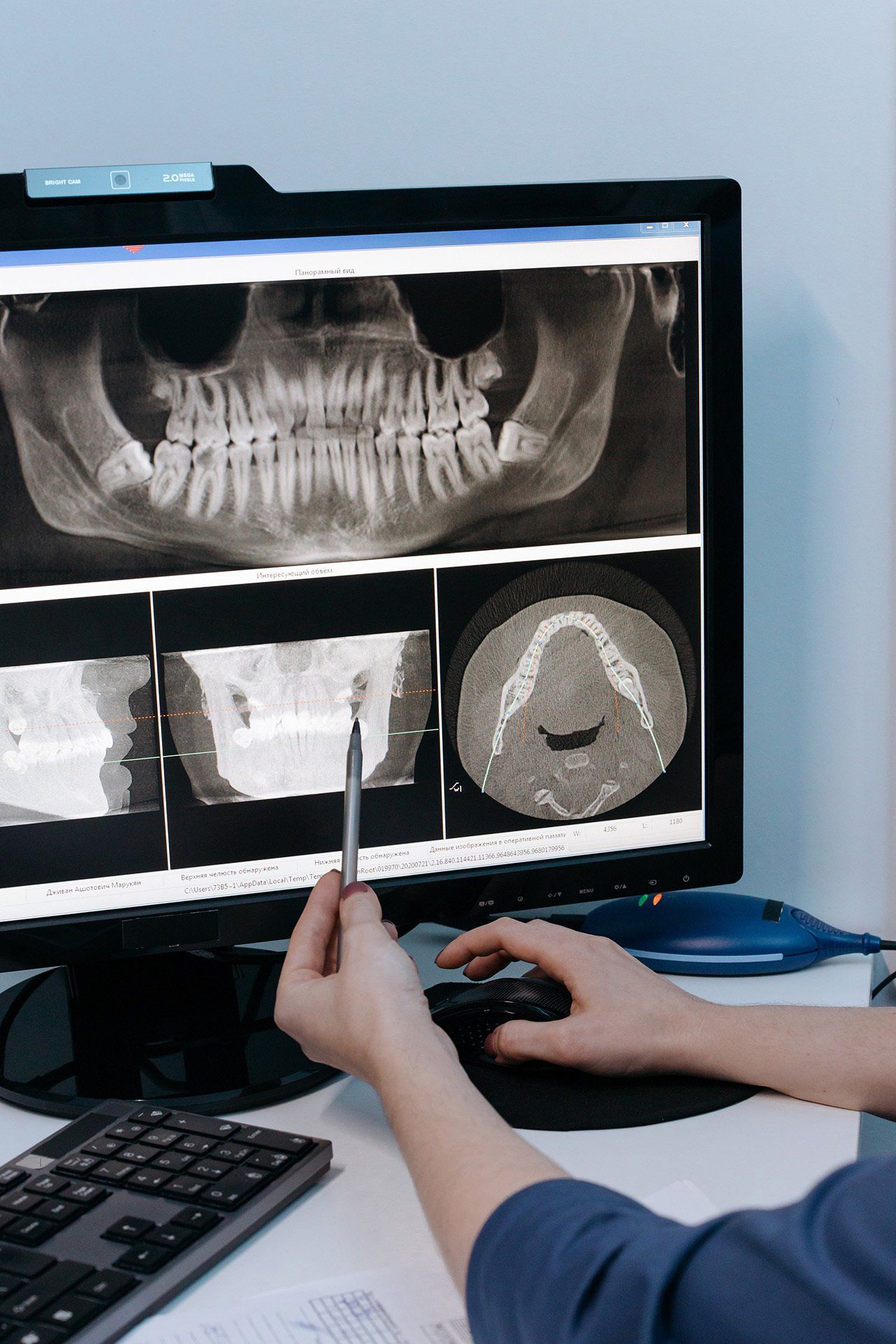
Cone Beam Computed Tomography (CBCT)
CBCT, a New Era in Digital X-ray
3D imaging improves diagnostic capability in specialty procedures
The practice of Dental Radiography has embraced Cone Beam Computed Tomography. It is a valuable diagnostic tool that has become a permanent part of many dental practices. Patients can, and do benefit enormously from the application of this technology.
A recent review of the number of systems acquired, the manner in which they are operated, and their frequency of use has given those involved with Radiation Safety in Dental Radiography sufficient information to determine that regular safety inspections are necessary.
Discussions between the B.C. Dental Association, WorkSafeBC , the Radiation Protection Division of the B.C. Center for Disease Control, Innovative Biomedical Engineering and many operators of CBCT systems have formed the basis of the present inspection program. The program is designed to mirror as closely as possible the present dental radiation survey program which has completed several thousand successful inspections. Parties involved in the development include software developers, hardware developers, regulators, our government, dental service and supply companies, The College of Dentists, the B.C. Dental Association and Biomedical Engineering.
At all times, the primary focus of the program has been patient safety, worker safety and public radiation safety. The designers of the program have kept in focus the need to gather accurate information in a way that limits impediments to the workflow of dental practices.
A New Standard to Measure Patient Dose
We can now calculate total measured exposure to the patient
Dose Metric - KAP
Kerma Area Product (KAP) has been introduced giving x-ray workers a way to measure total patient dose across devices. It is a measure of the radiation energy absorbed per unit mass of tissue multiplied by the area of tissue exposed. Its’ units are MilliGray Centimeters2 (mGy-cm2) and it relates in a more meaningful way than patient dose alone the manner in which the x-radiation interacts with the patient. This term, along with the dose measured by the measuring instrument is now included in all survey data. If your practice has been inspected using the present survey program, you will see CBCT, BW, PAN and Cephalometric patient radiation data presented in terms of KAP. You can use this data to determine the value of the KAP for all common dental radiographic examinations. In general, KAP values for CBCT examinations are higher than for most other dental radiographic examinations. In time, you will learn ways to control and minimize the KAP values for each of your CBCT and other examinations.